




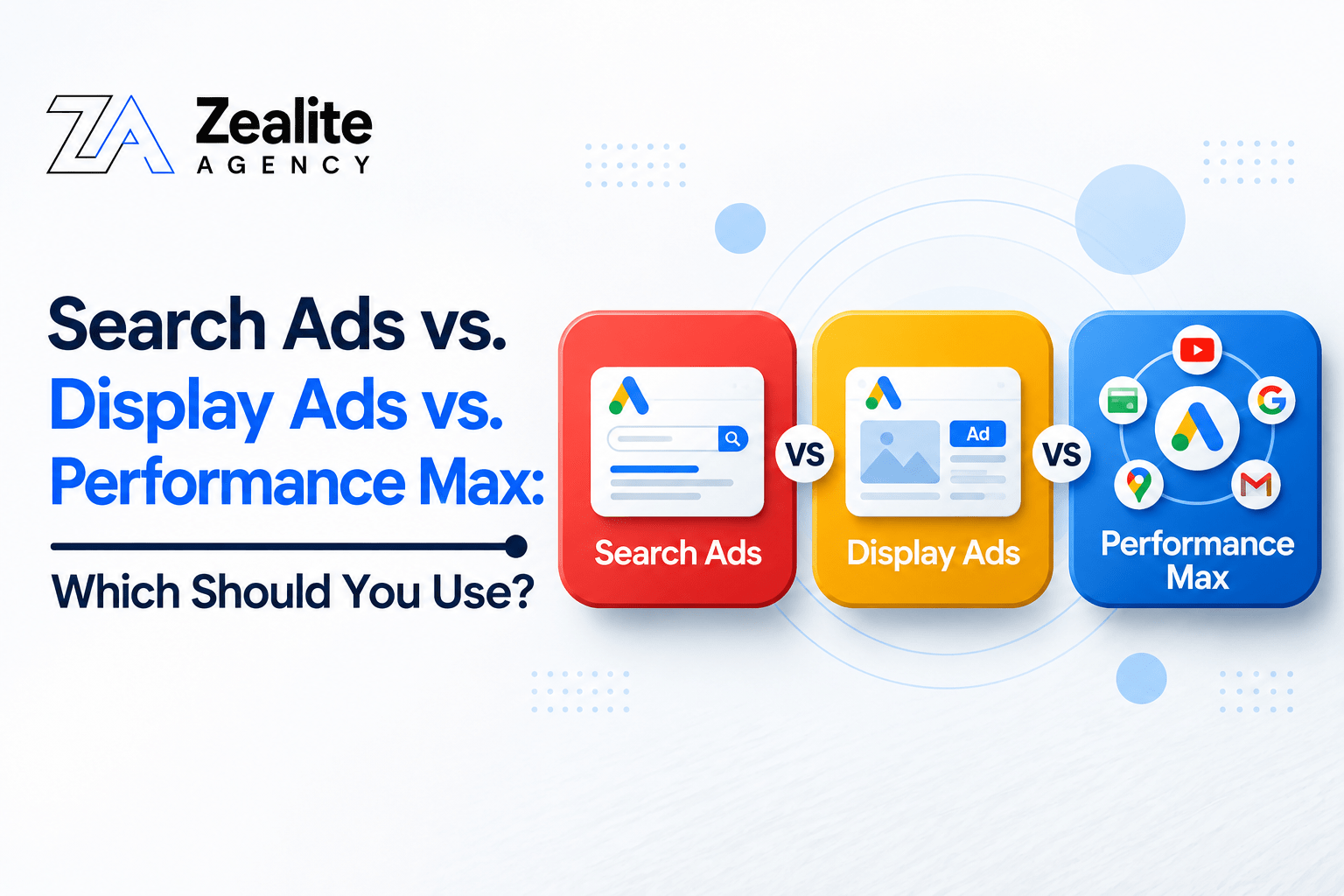
Choosing the right Google Ads campaign can make a significant difference in how a business attracts potential customers. While some campaigns reach people actively searching for services, others focus on building brand awareness or finding new conversion opportunities. The challenge is knowing which approach best fits your business goals and budget.
For businesses across the USA, understanding these options can help avoid wasted ad spend and improve campaign decisions. In this blog, we will explore Search Ads vs. Display Ads vs. Performance Max, their key differences, advantages, and limitations, and how to choose the right campaign for your business.
What are Search Ads?
Search Ads are text advertisements that appear in Google search results when people look for products or services related to your business. They use relevant keywords to connect advertisers with people who are actively searching for solutions.
For example, someone searching for a cleaning service in Gainesville may see ads from local cleaning companies.
Key features of Search Ads include:
- Keyword targeting: Reach people through relevant search terms.
- High purchase intent: Connect with potential customers actively looking for services.
- Text-based format: Use headlines, descriptions, and display URLs.
- Location targeting: Focus on specific cities, states, or service areas.
- Conversion-focused: Generate enquiries, calls, purchases, and bookings.
For service-based businesses, Search Ads can help attract customers who are ready to take action. A PPC agency in USA can help organize campaigns around relevant keywords, target locations, and business goals.
What are Display Ads?
Display Ads are visual advertisements that appear on websites and mobile apps across the Google Display Network. Unlike Search Ads, they reach people while they browse online rather than waiting for them to search for a particular service.
For example, someone reading about home improvement may come across an advertisement for a renovation company.
Key features of Display Ads include:
- Visual advertising: Use images, graphics, and engaging messages.
- Audience targeting: Reach people based on interests and demographics.
- Remarketing: Reconnect with eligible previous website visitors.
- Brand awareness: Introduce your business to new audiences.
- Flexible placements: Display ads across eligible websites and apps.
Display Ads are useful for businesses that want to build recognition and stay visible during the customer journey. For example, a cleaning business using cleaning company PPC services can combine search advertising with visual campaigns to reach potential customers and keep its brand familiar.
What is Performance Max?
Performance Max is a goal-based Google Ads campaign that allows businesses to advertise across multiple Google channels through a single campaign. For businesses working with a Gainesville PPC agency, it can be a useful option for expanding reach and generating conversions.
Key features include:
- Cross-channel reach: Advertise across multiple Google platforms.
- Automated bidding: Optimize bids based on campaign goals.
- Creative assets: Use headlines, images, descriptions, and videos.
- Audience signals: Guide Google towards relevant audiences.
- Conversion optimization: Use conversion data to improve campaign performance.
However, automation alone cannot guarantee results. Accurate tracking, relevant landing pages, quality creatives, and sufficient campaign data remain essential.
Search Ads vs. Display Ads vs. Performance Max: Key Differences
Although all three campaign types help businesses reach potential customers, their targeting methods, placements, and advertising purposes are different.
Understanding the difference between Search Ads, Display Ads, and Performance Max makes it easier to select the right approach.
| Comparison | Search Ads | Display Ads | Performance Max |
|---|---|---|---|
| Main purpose | Capture search demand | Build awareness | Drive conversions across channels |
| Ad format | Primarily text based | Primarily visual | Text, images, and videos |
| Targeting | Keywords and search intent | Audiences and contextual signals | Automated audience and placement optimization |
| Placements | Google Search | Websites and apps | Multiple Google channels |
| Automation | Varies by bidding strategy | Varies by campaign settings | Extensive automation |
| Best suited for | Active searchers | Brand visibility and remarketing | Multi channel conversion goals |
Difference Between Search Ads, Display Ads, and Performance Max in Terms of Intent
One of the biggest differences is the stage of the buying journey each campaign can address.
- Search Ads target active demand. Someone searching for an emergency plumber or dental appointment may already know what they need. Search advertising helps businesses appear when that demand exists.
- Display Ads help generate interest. People viewing a website may not be looking for your service at that moment. A relevant advertisement can introduce your business and encourage future consideration.
- Performance Max uses multiple signals to find conversion opportunities. It can reach audiences across different Google channels based on the campaign objective and available data.
This distinction matters because a campaign that performs well for brand awareness may not produce the same immediate enquiries as a search campaign.
Search Ads vs. Display Ads vs. Performance Max: Advantages and Limitations
Each Google Ads campaign type has its own strengths and limitations. Understanding them can help businesses choose an approach that fits their advertising goals and budget.
1. Search Ads
Advantages:
- Reaches people actively searching for products and services.
- Offers better control over keyword selection.
- Supports location-based targeting.
- Can generate enquiries from high-intent audiences.
- Provides useful search terms and conversion data.
Limitations:
- Competitive keywords can increase costs.
- Irrelevant keywords can waste ad spend.
- Limited search volume may affect specialised services.
- Poor landing pages can reduce conversions.
Search Ads are a practical choice for businesses looking to attract customers who are already searching for their services.
2. Display Ads
Advantages:
- Builds brand awareness among new audiences.
- Supports remarketing campaigns.
- Uses visual content to promote offers.
- Reaches people beyond Google search results.
- Maintains brand visibility throughout the customer journey.
Limitations:
- Clicks may not always lead to enquiries.
- Poor creatives can reduce engagement.
- Some placements may attract low-quality traffic.
- Measuring direct conversions can be challenging.
Display Ads work best when businesses have clear audience targeting, relevant creatives, and specific brand awareness or remarketing goals.
3. Performance Max
Advantages:
- Reaches audiences across multiple Google channels.
- Automates bidding and ad placements.
- Uses different creative assets.
- Optimizes campaigns towards conversion goals.
- Expands advertising reach beyond individual channels.
Limitations:
- Provides less direct control over placements.
- Relies on accurate conversion tracking.
- Requires quality creatives and relevant landing pages.
- Automated targeting can make performance analysis challenging.
Performance Max can help businesses expand their reach, but successful results still depend on proper campaign strategy, reliable data, and regular optimization.
Search Ads vs. Display Ads vs. Performance Max: Which Should You Use?
The right Google Ads campaign depends on your business goals, target audience, and advertising budget. Each campaign type serves a different purpose, so choosing the right one can help improve results.
1. Choose Search Ads When You Want Immediate Enquiries
Search Ads are suitable for businesses offering services that customers actively search for, such as:
- Dental clinics targeting dental treatment searches.
- Cleaning companies seeking residential and commercial enquiries.
- Contractors promoting repair and installation services.
- Professional service providers targeting specific locations.
A PPC agency for dentists can help align keywords, advertisements, and landing pages with relevant treatments and appointment enquiries.
Search Ads help businesses reach potential customers who are already interested in their services.
2. Choose Display Ads When Brand Awareness Is Your Priority
Display Ads are useful when you want to increase visibility among people who may not be actively searching.
Consider them when you want to:
- Introduce a new product or service.
- Promote seasonal offers.
- Reach audiences interested in your industry.
- Remind previous website visitors about your business.
- Build long-term brand awareness.
For example, a new dental clinic can use Display Ads to introduce its services to nearby communities. However, monitor engagement and conversions rather than relying only on impressions.
3. Choose Performance Max When You Want Multi-Channel Reach
Performance Max is worth considering when you want to reach potential customers across multiple Google channels without managing each placement separately.
It can suit:
- Online stores promoting multiple products.
- Businesses with clear conversion goals.
- Companies looking to expand advertising reach.
- Advertisers with reliable conversion tracking.
- Businesses with sufficient creative assets.
For example, an online furniture store can use Performance Max to promote products across Search, YouTube, Display, and other eligible channels.
Always evaluate conversion quality, not just the number of conversions reported.
Can You Use Search Ads, Display Ads, and Performance Max Together?
Yes. Businesses can combine Search Ads, Display Ads, and Performance Max to support different stages of the customer journey.
For example, a home improvement business in the USA can use:
- Search Ads: Reach people searching for renovation, installation, or repair services.
- Display Ads: Build brand awareness and reconnect with previous website visitors.
- Performance Max: Expand reach across Google’s advertising channels and generate conversion opportunities.
However, running all three campaigns is not always necessary. Businesses with limited budgets should start with the campaign that best matches their goals, review its performance, and expand when needed.
Understanding SEO vs PPC can also help businesses balance paid advertising with long-term organic search growth.
Important Factors to Consider Before Choosing a Campaign
Before selecting a Google Ads campaign, consider these five factors to make better advertising decisions:
- Understand Your Target Audience: Identify what customers are searching for, their interests, and how they make purchasing decisions.
- Set a Realistic Advertising Budget: Allocate your budget based on business goals, industry competition, and expected customer acquisition costs.
- Check Your Conversion Tracking: Track valuable actions such as purchases, form submissions, phone enquiries, and appointment bookings.
- Create Relevant Landing Pages: Direct visitors to pages that match their search intent, explain your services, and encourage them to take action.
- Monitor Results and Make Adjustments: Regularly review click-through rate, cost per click, conversion rate, cost per conversion, return on ad spend, and lead quality to improve campaign performance.
How Zealite Agency Helps Businesses Build a Smarter PPC Strategy
At Zealite Agency, we focus on making paid advertising more meaningful than simply generating clicks. As a digital marketing agency serving businesses across the USA, we help businesses hire PPC experts who build effective PPC strategies around business goals, audience needs, and campaign performance to attract qualified leads and maximize advertising ROI.
Our approach includes:
- Campaign planning: Choosing suitable Google Ads campaigns based on business objectives.
- Keyword research: Finding relevant search terms to attract potential customers.
- Audience targeting: Reaching people interested in your products or services.
- Ad optimization: Improving ad copy and creative assets.
- Performance monitoring: Reviewing results and identifying areas for improvement.
As the best digital marketing company in USA, our focus is on helping businesses make informed advertising decisions, attract relevant traffic, and generate valuable enquiries through well-planned PPC campaigns.
Conclusion
Search Ads, Display Ads, and Performance Max each serve a different purpose in Google Ads. Search Ads connect businesses with people actively searching for products or services, Display Ads help increase brand awareness and support remarketing, while Performance Max reaches potential customers across multiple Google channels through automation.
When comparing Search Ads vs. Display Ads vs. Performance Max, the right choice depends on your business goals, target audience, budget, and conversion objectives. Understanding how each campaign works can help businesses make better advertising decisions and get more value from their Google Ads investment.
FAQs
1. What is the main difference between Search Ads and Display Ads?
Search Ads appear when people search for relevant keywords on Google, while Display Ads appear across eligible websites and applications to build awareness and reach audiences.
2. Is Performance Max better than Search Ads?
Not necessarily. Search Ads offer greater keyword control, while Performance Max uses automation to reach audiences across Google channels. The best choice depends on your campaign goals.
3. Which Google Ads campaign is best for lead generation?
Search Ads are effective for lead generation because they target people actively searching for services. Performance Max can also generate leads with reliable conversion tracking.
4. Are Display Ads effective for small businesses?
Yes. Display Ads can help small businesses build brand awareness, promote offers, and reconnect with previous website visitors when targeting and creatives are relevant.
5. Can I run Search Ads and Performance Max together?
Yes. Both campaigns can run together. However, businesses should monitor their performance, conversion quality, and budget allocation to avoid unnecessary spending.
6. Does Performance Max require keywords?
Performance Max does not rely on traditional keyword targeting. Instead, advertisers can use search themes and audience signals to guide Google’s automation.
7. Which Google Ads campaign is best for brand awareness?
Display Ads are commonly used for brand awareness because they provide visual advertising placements across websites and applications. YouTube campaigns can also support awareness goals.
8. How much budget should I spend on Google Ads?
There is no fixed budget for every business. It depends on industry competition, target locations, average click costs, conversion goals, and the amount a business can reasonably invest.
9. How long does it take to see results from Google Ads?
Search Ads can generate clicks and enquiries soon after launch, but consistent performance and campaign optimization may take more time and conversion data.
10. How do I know whether my Google Ads campaign is successful?
Evaluate conversions, cost per lead, conversion rate, lead quality, and return on ad spend. The most important measurement is whether the campaign contributes to your business objectives.


